Archival Broadsides · Chicago Labor-Print Heritage
Pilsen PrintsArchival Broadsides & Working-Class Woodcut Heritage in Chicago’s Pilsen Neighborhood
The cheap street sheet, cut by hand and sold to working people, is the oldest thread in Pilsen’s print culture. This gateway gathers the Mexico City penny broadsides at the root of that thread — and follows it north to 18th Street.
Never enlarged · 300 PPI · Source named on every print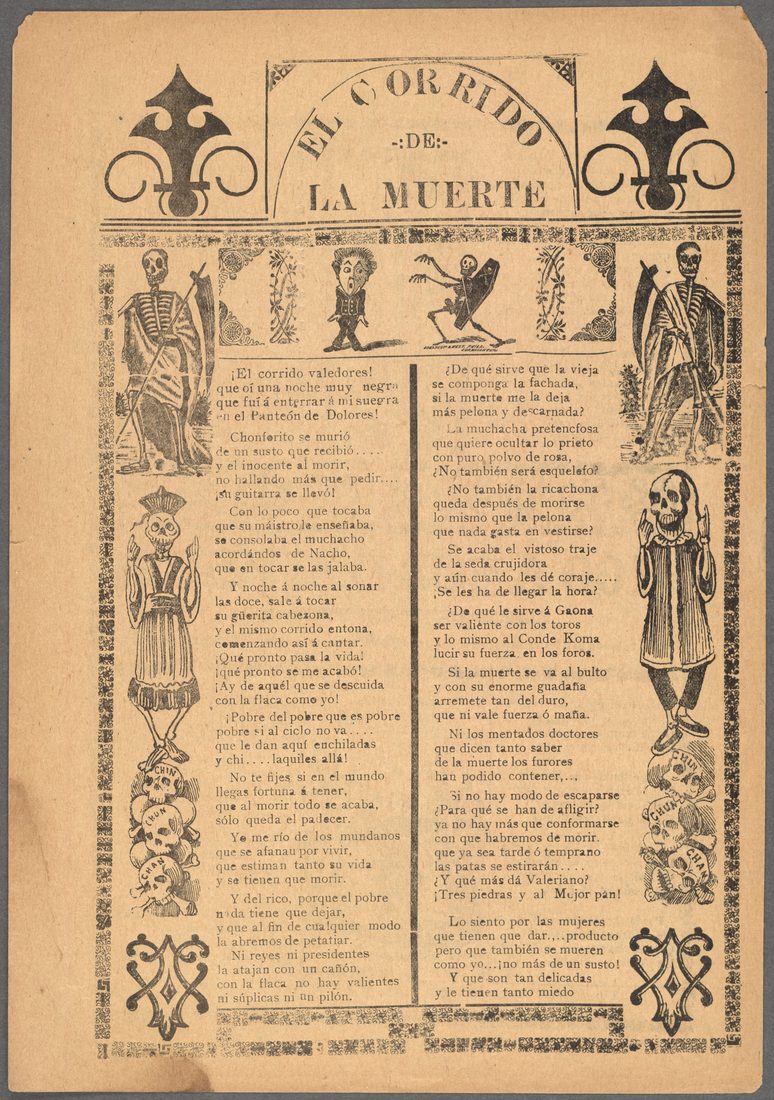
Library of Congress · No known restrictions
3775 × 5368 px · native 12.6 × 17.9 in
loc.gov 99615845
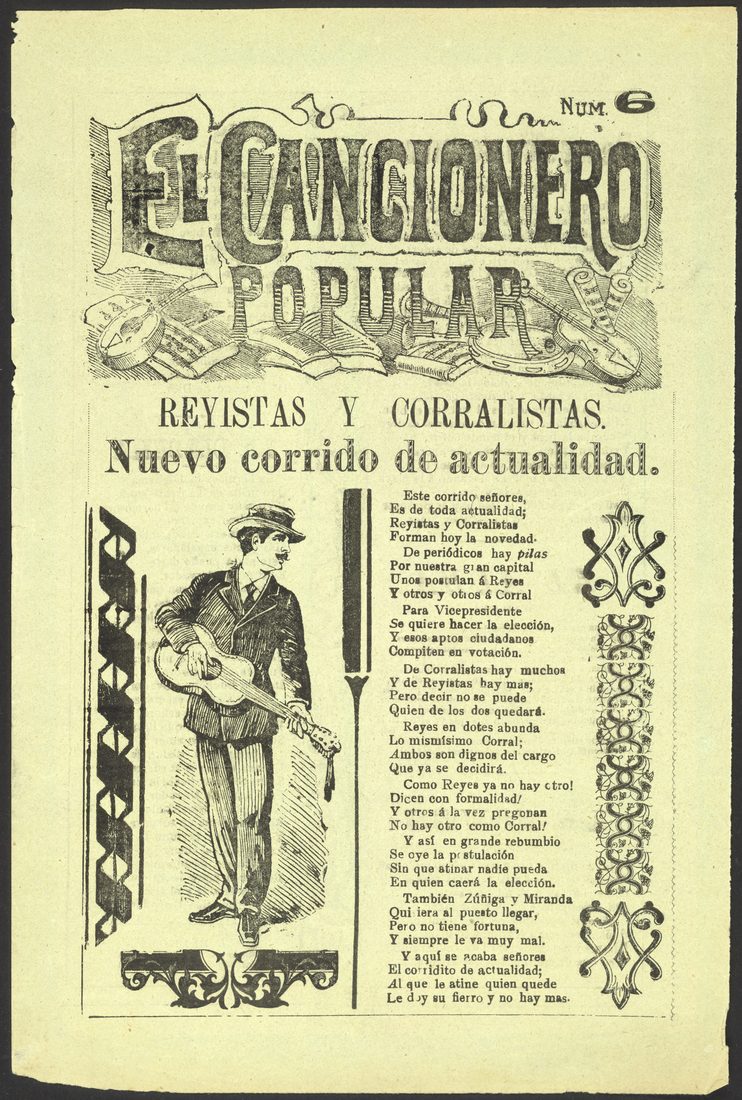
Library of Congress · public domain
3476 × 5155 px · native 11.6 × 17.2 in
loc.gov 99615841
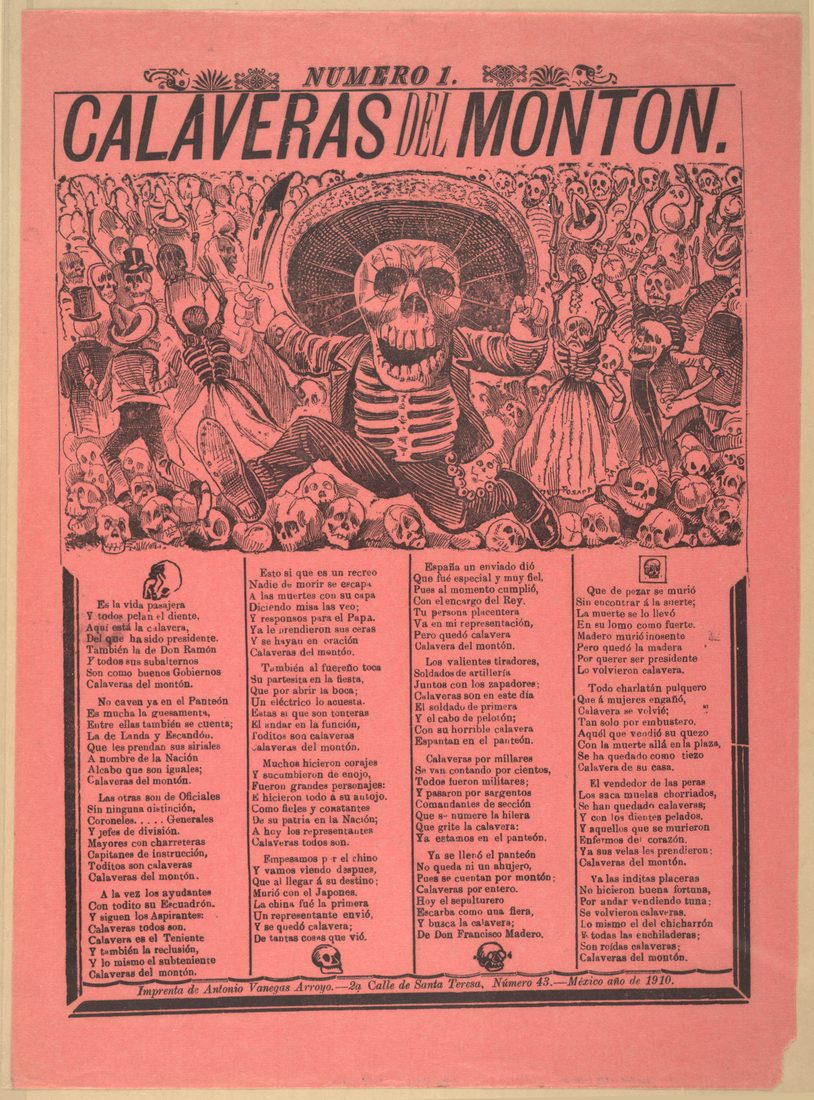
Library of Congress · No known restrictions
4622 × 6248 px · native 15.4 × 20.8 in
loc.gov 99615942
The Posada → Carlos Cortéz → Union Roots Bridge
One print tradition, Mexico City to 18th Street
The relief print never left the hands of working people. It moved from the plazas of Porfirian Mexico City to a postwar workshop, then to a Wobbly’s carving table in Chicago, and on to the collectives printing in Pilsen today.
Penny broadsides
Manuel Manilla and José Guadalupe Posada cut calaveras and corridos for the Vanegas Arroyo press — news, scandal and song for a few centavos.
Taller de Gráfica Popular
Leopoldo Méndez, Pablo O’Higgins and Luis Arenal’s workshop names Posada its precursor and makes the print a tool of organized labor.
Carlos Cortéz Koyokuikatl
The IWW poet-printmaker settles in Chicago, co-founds MARCH in 1975 and carves poster-portraits of labor’s martyrs, Joe Hill among them.
Pilsen’s print collectives
The Instituto Gráfico de Chicago keeps the line alive in Pilsen, from a 2013 Posada centennial show to recut Cortéz blocks.
A broadside was never meant for a vault. It was printed to be read aloud, passed hand to hand, and pinned to a wall where people worked.
Posada and Manilla worked for a publisher whose audience was the city’s laborers, servants and market vendors. Their skeletons wore the clothes of every trade and class, and their corridos carried strikes, floods and executions as news. When the Taller de Gráfica Popular formed in 1937, its artists claimed that lineage outright and turned the linocut toward unions and campesino movements.
Carlos Cortéz carried the same commitment into Chicago. A member of the Industrial Workers of the World for nearly sixty years, he arrived in 1965, helped found the Movimiento Artístico Chicano in 1975, and became a mentor to generations of Pilsen artists. His Joe Hill surrounds the Wobbly songwriter with the words of his life and a song urging workers to strike — a broadside in everything but name. Cortéz’s own prints remain under copyright and are not reproduced or sold here.
That is where this gateway meets Union Roots, the map of more than 21,000 American union locals, and Studio 1913, its union-made labor-heritage line. Same idea, a century apart: the people who do the work deserve a print of their own.
Sources: Smithsonian American Art Museum (Cortéz, Joe Hill, 1979) · Library of Congress (Méndez, Posada en su taller) · Hyperallergic on Carlos Cortéz: 100 Años, National Museum of Mexican Art · Denison Museum on the Instituto Gráfico de Chicago · IWW archive obituary (Chicago Tribune, 2005)
Pilsen Collector Tiers
Collect the root of the tradition
Amate-Tone Sleeved Miniature
A 5×7 in native plate on warm bark-tone stock, sleeved, with a provenance card naming the holding institution and record number.
Archival Plate
A single broadside on cotton rag at a size its master scan holds at 300 PPI, from 8×10 up to 11×14 in.
Numbered Broadside
An 18×24 or 24×36 in composite of plates from a single institution, set 1:1 on bone stock, numbered, with a signed certificate of authenticity.
Every plate is printed from the institution’s master scan at 300 PPI or smaller — never enlarged — and the institution’s name and record number are printed on it. The images are public domain; the edition is in the curation and the printing.
Collector’s Circle
Hear first when a Pilsen edition opens
Numbered broadsides run 100 per design. Circle members are told first, with the plates and the holding institution named.
Sister Galleries